.jpg)
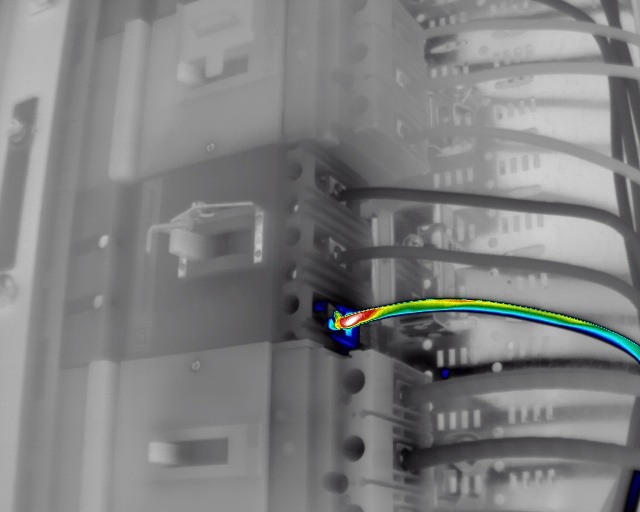
If you’ve identified an electrical hot spot in a panel, the immediate question is: is it dangerous, or just normal operating heat?
The answer isn’t a fixed temperature threshold. It depends on context: how that heat behaves over time, how it compares to load, and whether it aligns with other system signals.
TL;DR
A hot spot becomes a real electrical issue when it is:
-
Increasing over time
-
Out of proportion to load conditions
-
Localized or uneven
-
Correlated with electrical or environmental changes
Temperature alone isn’t enough—you need context to decide whether to act.
We See Hot Spots—But Don’t Know What They Mean
Thermal scans often reveal hot spots in panels, drives, and control cabinets, but teams struggle to interpret them. Some issues are ignored, others overreacted to, and failures still occur.
Hot spots are visible, but not always interpretable. Research from McKinsey & Company shows that predictive maintenance can reduce downtime by up to 50%, highlighting how costly it can be when early warning signs are missed or misinterpreted.
Why Electrical Hot Spots Are So Easy to Misinterpret
Not All Heat Is Abnormal
Electrical systems generate heat by design.
- Higher load = higher temperature
- Ambient conditions affect readings
- Ventilation differences create variation
A hot component isn’t automatically a failing one.
Static Thresholds Don’t Work
A common mistake is applying rules like “Anything above X°C is dangerous.” But in reality, the same temperature can be normal in one system and risky in another. Asset design, load profile, and environment all matter.
Temperature without context is misleading.
Snapshot Inspections Miss Context
Infrared scans capture a moment, not a trend.
They don’t show:
- Whether temperature is increasing
- Whether it fluctuates with load
- Whether the issue is stable or degrading
This is where most misinterpretation happens.
.jpg?width=448&height=296&name=email%20(1).jpg)
What Causes Electrical Hot Spots (And When They Matter)
Not every hot spot is a problem, and treating them all the same is where teams get into trouble.
In many cases, elevated temperature is simply a reflection of how the system is operating. Components under higher load will naturally run warmer. Enclosures with limited airflow may trap heat. Even small differences in design or placement can create visible variation across similar components.
These conditions can look concerning on a thermal scan, but remain stable over time and pose little risk. The challenge is that early-stage failures can look almost identical at first.
A loose connection, for example, may initially present as a slightly warmer point on a panel. A minor phase imbalance might only show up as a subtle temperature difference between components. Contamination or insulation breakdown can begin quietly without triggering any obvious alarms.
The difference isn’t always in how hot something is. It’s in how that heat behaves.
How to Diagnose a Dangerous Hot Spot
This is where most teams fall short—not in detecting heat, but in interpreting it. A hot spot only becomes meaningful when you start asking the right questions.
Is it changing over time?
A stable hot spot is often just part of normal operation. But when temperature increases gradually, without a corresponding change in load, that’s usually a sign of degradation. This is why trend matters more than a single reading. The temperature isn’t the problem. The change is.
Does it match operating conditions?
Heat should make sense in context. If a component is running hot under high load, that’s expected. But if it’s running hot when load is low or unchanged, that mismatch is often an early warning sign.
Is the heat concentrated or distributed?
The shape of the heat matters. Even, distributed warmth is typically benign. But a sharply localized hot spot—especially on a connection point—often indicates resistance, which is a common precursor to failure.
Are similar components behaving differently?
Electrical systems tend to behave symmetrically. When one phase, breaker, or connection runs noticeably hotter than others under the same conditions, it’s rarely random. That deviation is often where the problem starts.
Do other signals support what you’re seeing?
Temperature alone can suggest an issue, but it can’t confirm one. When thermal anomalies align with changes in current, load behavior, or environmental conditions like humidity, the signal becomes much more reliable.
One signal suggests. Multiple signals confirm.
The most dangerous hot spots are rarely the most obvious ones. They’re the ones that evolve quietly—becoming slightly warmer, slightly more localized, slightly more out of sync with the rest of the system. Individually, those changes are easy to dismiss. But together, they form a clear pattern of early-stage failure.
Why Temperature Alone Leads to Bad Decisions
Relying on temperature alone doesn’t just limit visibility. It actively leads to bad decisions.
In some cases, teams act too quickly. A hot spot
appears, gets flagged as a risk, and triggers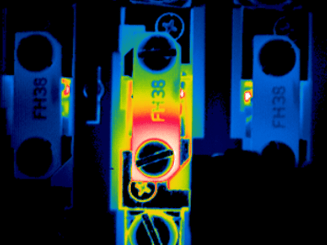 maintenance that wasn’t actually needed. Components are replaced, time is lost, and operations are disrupted, all based on a signal that lacked context. In other cases, the opposite happens, and it’s far more dangerous.
A hot spot is noted but dismissed. It doesn’t seem urgent. There’s no clear trend, no supporting data, no reason to escalate. So it sits unchanged and uninvestigated—while the underlying issue continues to develop. And by the time it becomes obvious, it’s no longer early-stage.
The core issue isn’t detection. Most teams can already see thermal anomalies. It’s interpretation.
Knowing:
- which signals matter
- which ones don’t
- and when to act
are the key elements you need to make maintenance planning decisions. Temperature on its own can’t answer those questions. It needs context.
How to Monitor Hot Spots Effectively
Improving outcomes doesn’t require more alerts. It requires better visibility into what those alerts actually mean.
Move beyond periodic thermal imaging
Manual inspections still play a role, but they have inherent limitations. They capture a single moment, depend on timing, and offer no insight into how conditions are evolving. A hot spot that appears stable in a scan may have been increasing for weeks, or may disappear entirely the next day. Without continuity, it’s impossible to know.
Focus on trends, not snapshots
What matters isn’t whether something is hot—it’s whether it’s changing. Continuous monitoring allows teams to see gradual shifts: small increases in temperature, emerging imbalances, or patterns that would never be visible in isolated inspections. This is where early-stage failures become detectable.
Establish baselines that reflect reality
Instead of relying on fixed thresholds, effective monitoring starts with understanding what “normal” looks like for each asset. That includes:
- how it behaves under typical load
- how it responds to environmental conditions
- how it compares to similar components
From there, deviations become meaningful, not just noticeable.
Define action based on risk, not temperature
Not every hot spot requires intervention. The priority should be driven by:
- how quickly conditions are changing
- how far they’ve deviated from baseline
- whether multiple signals point to the same issue
Temperature is just one input. Decision-making should reflect the full picture.
What To Do When You Detect a Concerning Hot Spot
Once a hot spot stands out as potentially meaningful, the goal isn’t to react immediately—it’s to validate and prioritize.
1 . Start by adding context
Before taking action, confirm what the system is actually doing. Look at load conditions. Check for electrical irregularities. Consider environmental factors like humidity or airflow. A thermal anomaly on its own is a clue, but not a conclusion.
2. Prioritize based on how the risk is evolving
Some issues can wait. Others can’t. What matters most is how quickly the condition is changing and how strongly it correlates with other signals. A slowly increasing hot spot may warrant monitoring. A rapidly changing, highly localized one likely requires intervention.
3. Take targeted action
When intervention is required, precision matters. In many cases, the fix is straightforward—tightening a connection, removing contamination, or replacing a degraded component. But the key is acting on validated insight, not assumption.
4. Confirm that the issue is actually resolved
After intervention, the job isn’t done. Track the behavior of the asset. Has the temperature stabilized? Has the trend flattened? Are related signals back to normal? Without that confirmation, you’re still operating on guesswork.
FAQ
What temperature is considered a dangerous hot spot?
There is no universal threshold. Risk depends on load, asset type, and environment. Trend and correlation matter more than absolute temperature.
Are all electrical hot spots a sign of failure?
No. Many are normal and load-driven. The key is identifying whether they are changing or behaving abnormally.
How do you tell if a hot spot is caused by a loose connection?
Look for localized heating, gradual increase over time, and imbalance compared to similar components.
Can infrared scans alone diagnose electrical issues?
No. They provide visibility—but not full diagnosis. Additional electrical and environmental data is required.
How often should hot spots be monitored?
Periodic scans help, but continuous monitoring is far more effective for detecting trends and early-stage failures.
Hot spots aren’t always problem, but misinterpreting them can be. Most teams already have visibility into temperature. What they lack is the context to interpret it correctly. When you combine thermal data with load, electrical behavior, and environmental conditions, hot spots stop being noise, and start becoming actionable signals.
The goal isn’t to detect more anomalies. It’s to understand which ones actually matter.