The Misconception About Continuous Monitoring
For many buyers, “continuous monitoring” sounds like more technology layered onto an already crowded environment.
More alerts.
More dashboards.
More tools to manage.
That assumption makes sense. Most teams already feel overloaded with data, alarms, and systems competing for attention. Adding another signal source feels like adding noise. But in practice, the most significant change introduced by continuous monitoring is not technological. It is operational.
The real shift is not what systems teams use. It is how they see, prioritize, and respond to risk.

What Does Not Change
One of the most common misconceptions about continuous monitoring is that it replaces existing operational infrastructure. It does not.
In most environments, the following remain unchanged:
-
CMMS systems still manage work orders and maintenance history
-
PLCs and control systems still run equipment and enforce protections
-
People still make decisions about when and how to intervene
Continuous monitoring does not automate maintenance decisions or remove human judgment. It does not eliminate inspections, schedules, or operational constraints. The same teams, systems, and processes remain in place. What changes is the quality and timing of the information feeding those decisions.
What Actually Changes With Continuous Coverage
The shift from walkdowns and periodic checks to continuous coverage changes visibility.
Instead of seeing asset condition at discrete moments, teams gain ongoing insight into how assets behave under real operating conditions.
This changes several things at once:
-
Degradation is surfaced as it develops, not after it accumulates
-
Risk is evaluated based on behavior and trend, not calendar position
-
Response timing becomes intentional instead of reactive
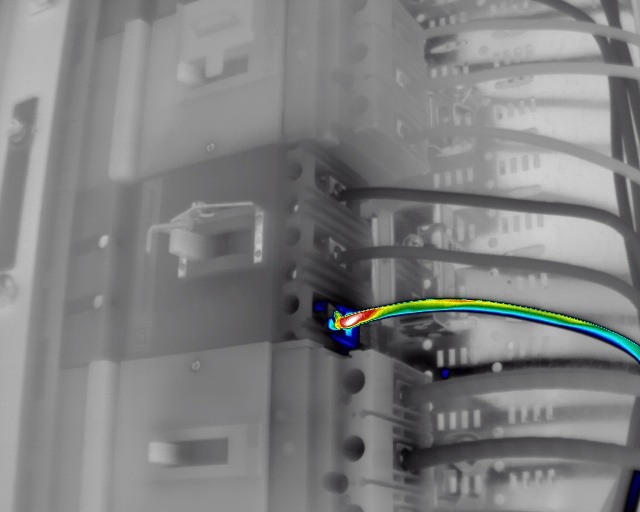
The goal is not to generate more alerts. It is to reduce uncertainty between inspections and alarms. See it in action with this customer’s early fire detection – saving over $500,000 in their first year.
Why Continuous Coverage Reduces Firefighting
.jpg?width=402&height=403&name=moisture%20leak%20data%20centre%20thermal%20image%20(1).jpg)
Firefighting often occurs not because teams lack skill, but because they lack early, trusted insight.
When degradation is only discovered after impact:
- Decisions are compressed
- Labor is dispatched under pressure
- Interventions are reactive by necessity
Continuous coverage reduces firefighting by shifting when teams become aware of risk.
Earlier visibility allows teams to:
- Plan maintenance around operations instead of interrupting them
- Coordinate labor and access before conditions escalate
- Apply consistent decision logic instead of one-off judgment
The work performed may not change. The conditions under which it is performed do.
Signal Quality Matters More Than Signal Volume
A common concern among buyers is alert fatigue. The fear is that continuous monitoring simply produces more signals to manage.
In practice, signal volume is not the differentiator. Signal quality is.
High-quality signals share three characteristics:
- They are tied to meaningful changes in asset behavior
- They provide context, not just thresholds
- They are consistent enough to build trust over time
Low-quality signals generate noise because they lack context. High-quality signals reduce noise because they clarify what matters. This review published in Applied Sciences, notes that condition-based maintenance enables more effective operations and maintenance by continuously monitoring detailed machine health information.
Continuous monitoring is effective only when it improves confidence, not when it increases alert counts.
Before and After: How Operational Behavior Changes
Before continuous coverage:
- Teams rely on scheduled walkdowns and periodic scans
- Asset health is inferred between inspections
- Issues surface suddenly, forcing rapid response
After continuous coverage:
- Teams have ongoing visibility into asset behavior
- Degradation is recognized earlier, while options still exist
- Responses are planned rather than improvised
The difference is not speed for its own sake. It is control. A proactive reliability culture encourages teams to anticipate issues and make planned interventions rather than constantly reacting, giving them room to choose how and when to act.
Trust Is the Real Enabler
Continuous monitoring only works if teams trust the signals they receive.
Trust is built when:
- Signals are explainable, not opaque
- Trends align with observed behavior
- Alerts are rare enough to matter
When trust exists, teams respond earlier without second-guessing. When it does not, signals are ignored, regardless of how advanced the technology is.
This is why signal quality matters more than signal volume. Trust determines whether insight leads to action.

Why This Is a Shift in Perspective, Not Process
Moving from walkdowns to continuous coverage does not require abandoning existing processes. It requires rethinking what “coverage” actually means.
Coverage is not how often assets are checked. Coverage is whether meaningful change can occur without being seen.
Continuous monitoring addresses that gap. Not by automating decisions, but by improving the conditions under which decisions are made.
What Actually Changes
Continuous monitoring does not replace people, schedules, or systems.
It changes:
- Visibility from intermittent to continuous
- Timing from reactive to intentional
- Response from firefighting to planning
For teams evaluating condition monitoring, the key question is not how much data it produces.
It is whether it changes how confidently and calmly teams respond to risk.