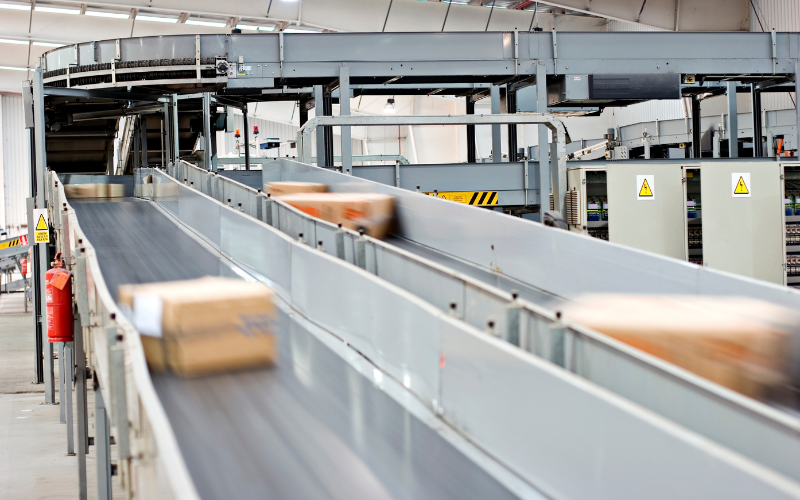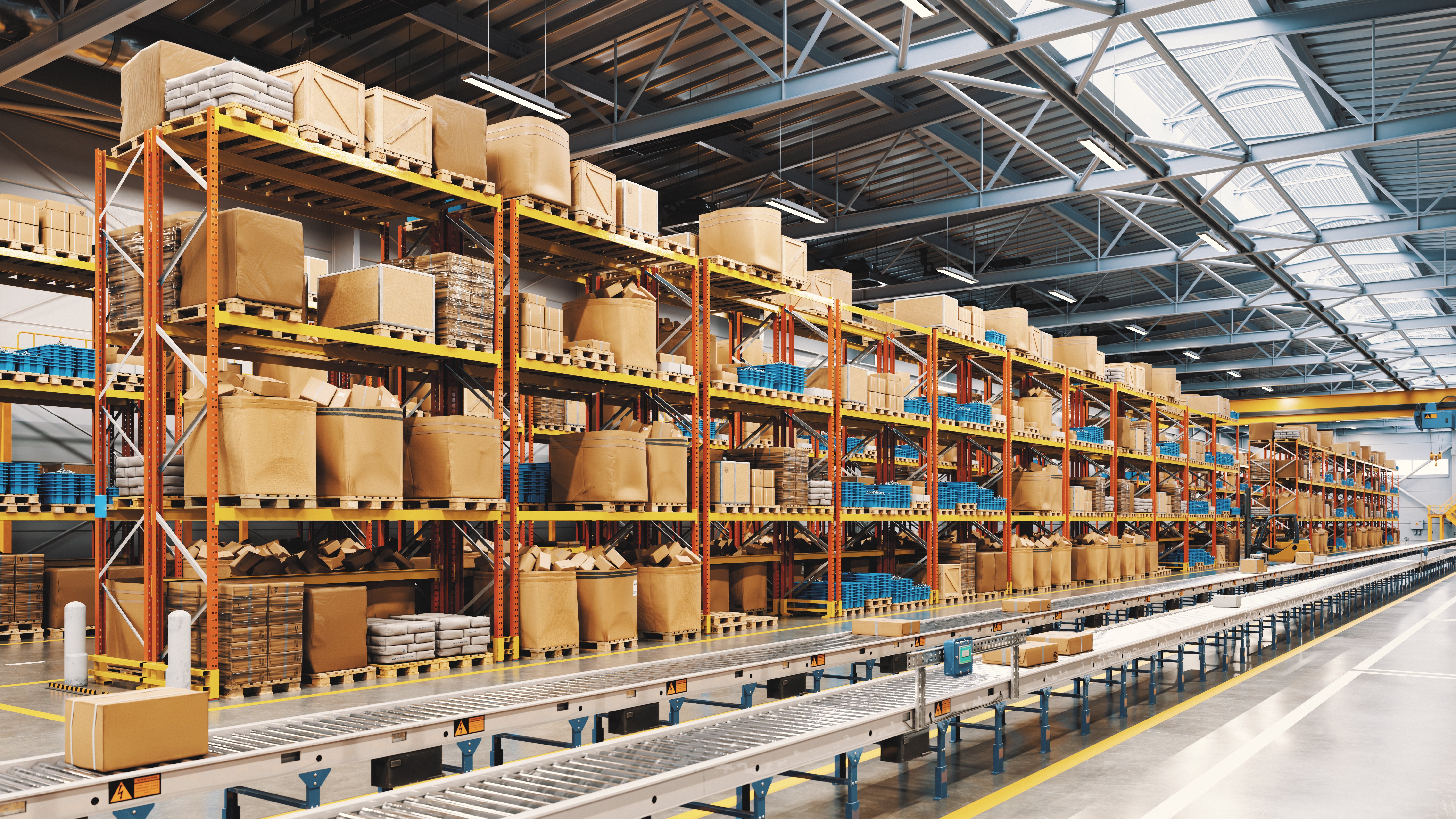
In many facilities, maintenance prioritization focuses on failures that stop production—motor faults, conveyor stoppages, or electrical failures. But most conveyor systems do not fail suddenly.
They operate in a degraded state for days or weeks, where small mechanical issues are present but not severe enough to trigger alarms.
Common examples include:
- A dragging roller
- A slightly misaligned belt
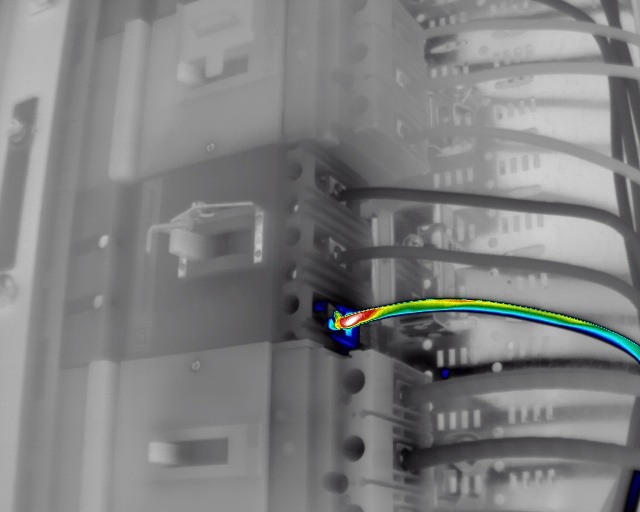
- A drive cabinet running hotter than normal
 Because the system is still running, these issues are often deferred. But “non-critical” does not mean “no impact.”
Even when conveyors stay online, small deviations can reduce speed stability, increase friction, and quietly erode throughput over time.
Research from CEMA shows that conveyor performance is highly sensitive to resistance and alignment conditions, meaning small inefficiencies can impact system capacity long before failure occurs.
How Do Small Conveyor Issues Increase Mechanical Resistance?
Conveyor systems are designed to move material with minimal resistance. When components are functioning properly:
- Rollers rotate freely
- Belts track evenly
- Bearings operate with low friction
This allows consistent speed and efficient material flow. Small mechanical issues disrupt that balance. Common sources of increased resistance include:
- Dragging or seized rollers
- Belt misalignment causing edge friction
- Early-stage bearing degradation
- Debris buildup interfering with movement
Individually, these may seem minor. But operationally, they all increase system resistance.
According to this 2025 conveyor engineering study,
frictional losses in rotating equipment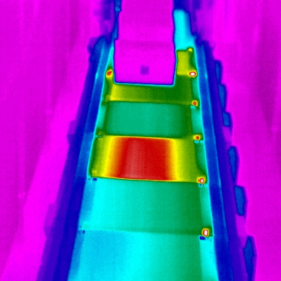 directly increase energy demand and mechanical load—reducing system efficiency and performance. That added resistance forces motors and drives to work harder, leading to:
- Increased energy consumption
- Reduced speed consistency under load
- Higher mechanical strain across components
Over time, this translates into
measurable performance degradation—even without a failure event.
How Does Throughput Loss Appear Before Conveyor Failure?
Throughput loss rarely appears as a clear failure signal. Instead, it shows up as subtle operational changes that are easy to overlook.
Common early indicators include:
- Conveyor sections running slightly slower during peak load
- Increased recirculation in sortation systems
- Localized accumulation at specific zones
- More frequent operator intervention
Because the system is still running, these issues are often attributed to:
- Volume variability
- Product mix
- Normal operational fluctuation
But in many cases, the root cause is increasing mechanical resistance within the system.
Material handling research from MHI highlights that small inefficiencies in conveyor flow can reduce effective throughput and increase handling time—especially in high-throughput distribution environments.
|
Example: A single dragging roller may reduce belt speed by only a few percentage points under load.
No alarm is triggered. No failure occurs. But output is lower than it should be. |
Why Do Small Conveyor Inefficiencies Cascade Across the System?
Conveyor systems are interconnected. This means small inefficiencies rarely stay isolated—they propagate across the network. A typical cascade looks like this:
- Increased drag slows a conveyor section slightly
- Product begins to accumulate upstream
- Sortation timing becomes less consistent
- Downstream congestion increases
- Overall system throughput declines
Studies on flow efficiency in automated systems show that even small disruptions in one node of a system can create nonlinear impacts on overall throughput and cycle time.
These effects are most visible during peak operating conditions, when systems are already running near capacity.
At that point:
- Even a small slowdown can create bottlenecks
- Minor delays compound across zones
- System-wide performance drops
What starts as a component-level issue becomes a system-level constraint.
How Does Earlier Detection Help Prevent Conveyor Throughput Loss?
The challenge is not that these issues are undetectable. It’s that they are typically detected too late—after performance has already degraded. Traditional approaches rely on manual inspections, scheduled maintenance checks, and/or threshold-based alarms.
These methods are effective for identifying advanced or obvious issues, but they often miss early-stage changes. Continuous condition monitoring improves this by tracking:
- Changes in vibration patterns (mechanical friction)
- Temperature shifts (heat from resistance)
- Electrical load variations (motor strain)
Earlier detection of equipment degradation can significantly reduce operational losses and improve system efficiency. This allows teams to identify:
- Emerging drag from a failing roller
- Early misalignment before visible tracking issues
- Load increases caused by bearing degradation
The benefit is timing.
This is not about predicting failure with certainty. It is about identifying performance-impacting changes earlier, when action is still low-cost and low-risk.
What Does Throughput Loss Look Like in Real Conveyor Operations?
Small mechanical issues become operational problems in very specific ways.
| Component | Mechanical Issues |
| Dragging Roller | Creates localized drag on the belt Reduces speed under peak load Causes upstream accumulation during busy periods |
| Belt Misalignment | Requires repeated operator intervention Introduces small but frequent stoppages Reduces effective throughput across shifts |
| Early Bearing Degradation | Increases load on the drive system Causes speed instability under volume Leads to downstream congestion |
In all cases, the system remains operational and no major failure occurs, but throughput is reduced. This is where most hidden performance loss lives.
How Can Maintenance Teams Reduce Hidden Conveyor Throughput Loss?
Throughput loss in conveyor systems rarely starts with a failure. It starts with small, compounding inefficiencies such as increased friction, mechanical imbalance, and gradual resistance.
When these issues go undetected, they reduce system performance long before downtime occurs. When they are identified earlier, teams can:
- Maintain consistent flow across conveyor networks
- Avoid accumulation and congestion
- Preserve system capacity during peak demand
As conveyor systems become more automated and throughput expectations increase, maintaining performance—not just preventing failure—is becoming a core reliability priority.
Want to Identify Conveyor Throughput Loss Before It Impacts Operations? Most conveyor issues don’t stop your system—they slow it down. Talk to an engineer to see how earlier detection of mechanical resistance, misalignment, and component degradation can help maintain throughput and prevent hidden performance losses.