Most operations and maintenance leaders believe they have strong reliability programs. Inspections are scheduled. OEM alarms are enabled. Dashboards are populated. KPIS look in control. Teams are trained and engaged.
And yet, failures still arrive as surprises. Conveyors stall during peak. Motors fail mid-sort. Throughput drops at the worst possible moment, triggering reactive firefighting instead of a controlled response.
When leaders say, “We didn’t see it coming,” they’re usually not pointing to a lack of effort or expertise. They’re describing a visibility problem. Most failures aren’t unpredictable. They’re detected too late to alter course or too late to execute a remedy. These challenges are especially common in distribution centre reliability programs, where asset performance, throughput pressure, and limited access windows collide.
Why Issues Surface After Impact
In large distribution centers and parcel hubs, assets rarely fail instantly. Degradation builds gradually, under load, heat, vibration, or intermittent stress, long before alarms trigger or scheduled inspections catch it.
The challenge is how today’s visibility methods work in practice:
- Inspections provide snapshots of that moment in time, not continuity, which is why time-based maintenance and manual inspections often miss early-stage degradation.
- OEM alarms are designed based on historical patterns and to protect equipment, not operations. Thresholds often trigger after damage has already accumulated and do not account for all non-engineering variables. This is a well-documented limitation of traditional OEM alarms and condition monitoring thresholds, which are designed to protect equipment—not operational uptime.
- Multiple dashboards aggregate data but don’t always translate it into decision-grade insight into what is changing and why, causing confusion and increasing admin time spent correlating.
The result is a systemic blind spot. Teams are forced to make conservative replacements, react under pressure and force teams to accept risk, or accept unplanned downtime—not because they missed signals, but because the signals arrived too late. It can be risky to rely on manual inspections to ensure presence at the exact moment performance begins to degrade.
You don't accept unplanned downtime. You endure unplanned downtime.
Actionable Timing vs. Knowing Too Late
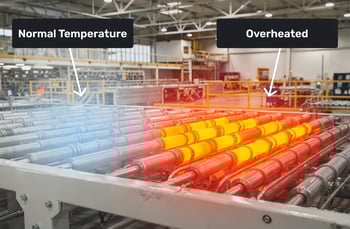 Reliability programs necessarily focus on understanding what happened — confirming failure modes, validating root cause, and explaining why alarms triggered. That insight is critical for preventing repeat events. But it does not change the outcome of the downtime that has already occurred.
Operational value comes from timing, not accuracy alone. The real differentiator is whether teams achieve early failure detection while there is still time to intervene.
Teams don’t need perfect forecasts. They need insight early enough to change a maintenance decision. If detection happens after a cutoff is missed or throughput is already compromised, even flawless diagnosis doesn’t help.
Late certainty is still failure - because failure visibility without actionable timing does not prevent downtime.
This is the difference between failure prevention and failure visibility. Many programs excel at explaining failures. Far fewer are optimized to surface degradation early enough to intervene. In fact, Maintenance Online reports that optimized “maintenance programs show 30-50% reductions in downtime” – enough to make a serious impact on a business.
What Early Detection Really Requires
True decision-grade insight depends on continuous condition monitoring, not isolated data points. To act earlier, teams need to know:
- What is changing (component behavior, operating pattern, signal consistency)
- How fast it’s changing (trend direction, intermittency, acceleration)
- Under what conditions does it change (load, temperature, duty cycle, environment)
- When intervention shifts risk from acceptable to critical
Without this context, teams are left reacting instead of executing a condition-based maintenance strategy.
Why Time-Based Maintenance Still Dominates
Time-based schedules persist for good reasons. They’re simple, predictable, and easy to plan around labor availability and access windows. In stable environments, they still make sense.
But modern DCs and parcel hubs aren’t stable environments, which is why time-based maintenance alone increasingly fails to keep pace with operational variability. Load variability, seasonal surges, extended operating hours, and constrained access windows all introduce risk that calendars can’t capture. The key to a successful condition monitoring program is repeatability.
Condition monitoring doesn’t replace time-based maintenance. It augments it where variability and consequence are highest—bridging the gap between scheduled checks and late-stage alarms. When used effectively, condition-based monitoring increases equipment uptime by another 20% (Gitnux Preventive Maintenance Statistics, 2026).
Where Continuous Monitoring Fits
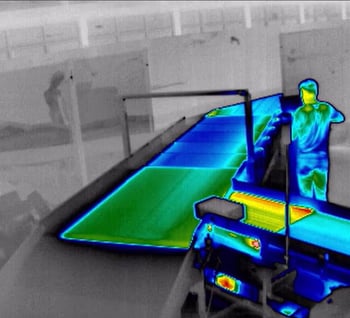
Teams struggle to see degradation early because visibility is intermittent. Between inspections and alarms, assets are effectively unobserved.
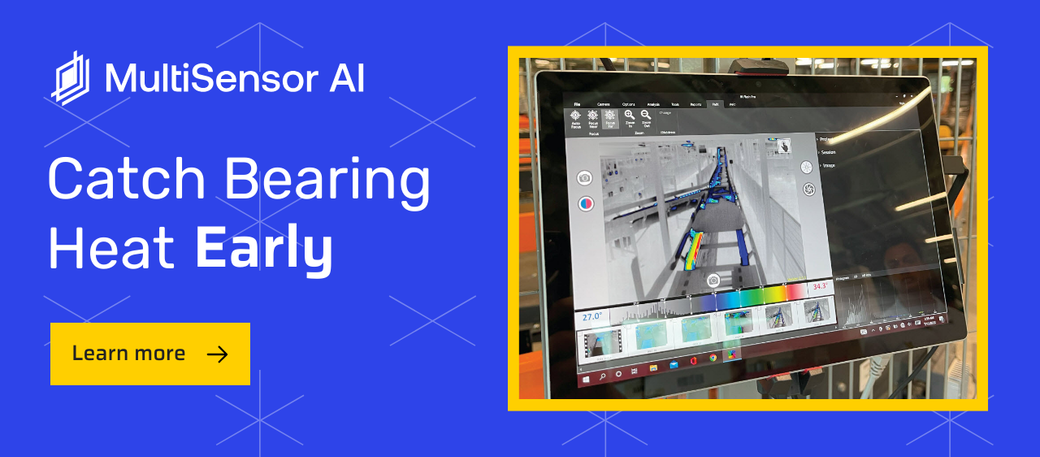
This is where 24/7 asset monitoring with a solution like MSAI Connect becomes critical - not to predict failure dates, but to surface degradation patterns as they emerge
Continuous monitoring changes that equation—not by predicting failures, but by revealing degradation patterns as they emerge. Earlier visibility allows teams to:
- Adjust maintenance timing before operational risk escalates
- Coordinate labor and access intentionally, maximizing safety
- Reduce emergency interventions during peak windows
The outcome isn’t fewer failures—it’s fewer surprises and more controlled maintenance planning decisions.
Proof From the Field
Across large-scale distribution and parcel environments, a consistent pattern emerges. Missed cutoffs and throughput loss rarely stem from unknown failure modes. They stem from late detection.
In multiple deployments, teams identified degradation days or weeks earlier than before—well ahead of scheduled tasks—allowing maintenance to be planned in low-impact windows rather than during peak demand.
The decision didn’t change what was fixed. It changed when it was addressed.

What Happens If You Miss It?
When degradation isn’t seen early:
-
Safety exposure rises during rushed interventions
-
Secondary damage increases repair scope, time, and cost
-
Unplanned downtime cascades upstream and downstream of the process flow
-
Labor shifts from planned work to reactive response
-
Maintenance decisions become inconsistent and defensive
Reframing Reliability Success
 Strong reliability programs don’t fail because of poor intent or execution. They struggle because insight arrives too late to matter.
The hidden KPI top operators optimize isn’t prediction accuracy—it’s breakdowns between inspection frequency.
The question isn’t if assets fail, but when you see it. Teams using early detection and condition monitoring software such as MSAI Connect, gain the time needed to act before impact. Make the most of your time and speak with our reliability experts today.

.jpg)